

Chinese characters and pinyin
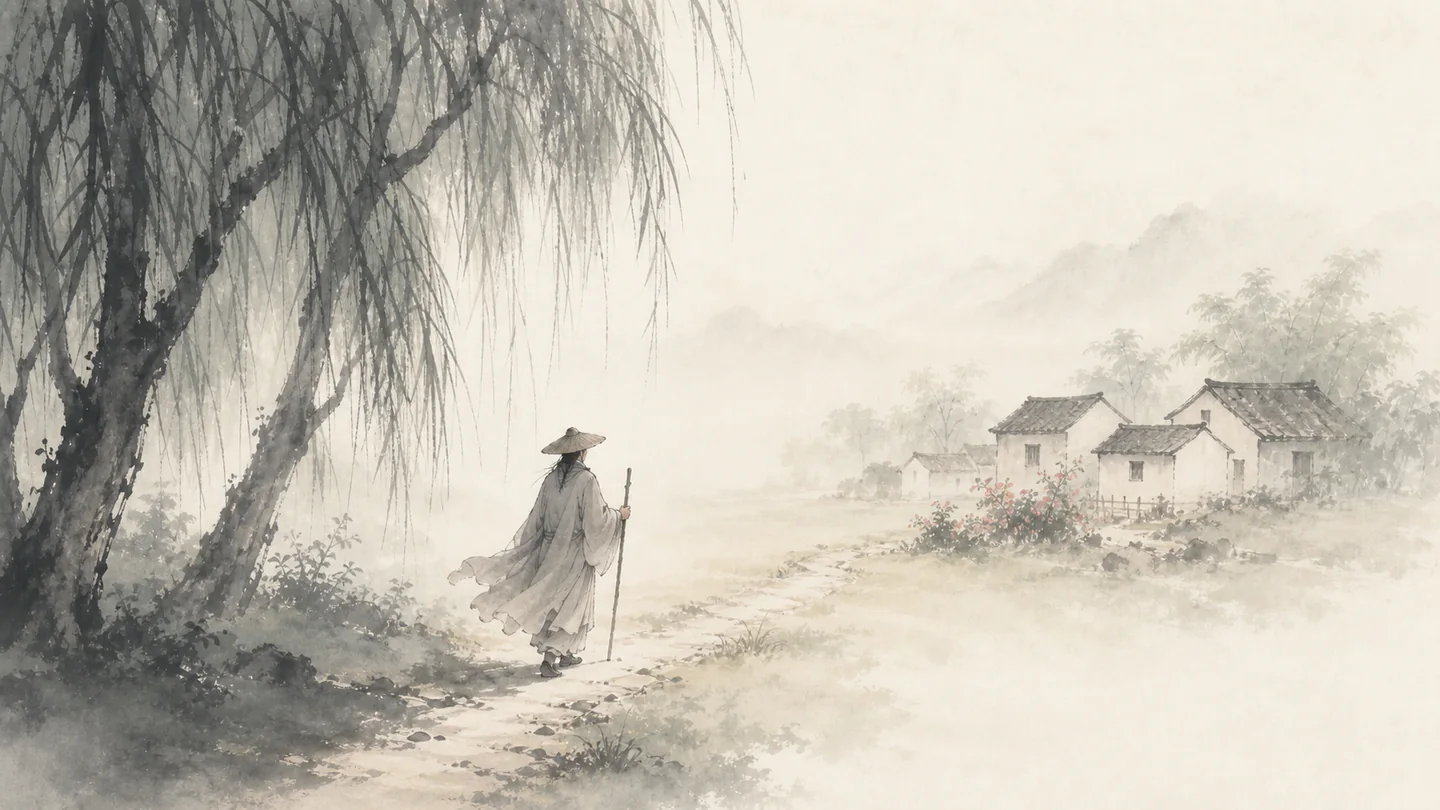
Simplified: 柳暗花明又一村
Traditional: 柳暗花明又一村
Pinyin: liǔ àn huā míng yòu yī cūn
Literal translation
Beyond dark willows and bright flowers, another village appears.
Natural English meaning
When the way seems blocked, a new possibility may suddenly emerge.
Closest English equivalent
There is light at the end of the tunnel.
The Chinese line evokes discovery after a winding journey; the English one imagines emerging from darkness.
When to use it
Use it when an unexpected solution or hopeful turn appears.
When not to use it
Avoid presenting it as a literal rule; the force of the saying depends on context and tone.
Example sentence
我们以为没有办法了,没想到柳暗花明又一村。
We thought every route was closed, but a new solution suddenly appeared.
Origin and cultural context
A line from the Song poet Lu You’s ‘Visiting a Village in Shanxi,’ later used idiomatically.
Classification: classical quotation. This label distinguishes a complete proverb or popular saying from a compact idiom or a quotation preserved from a classical text.
