

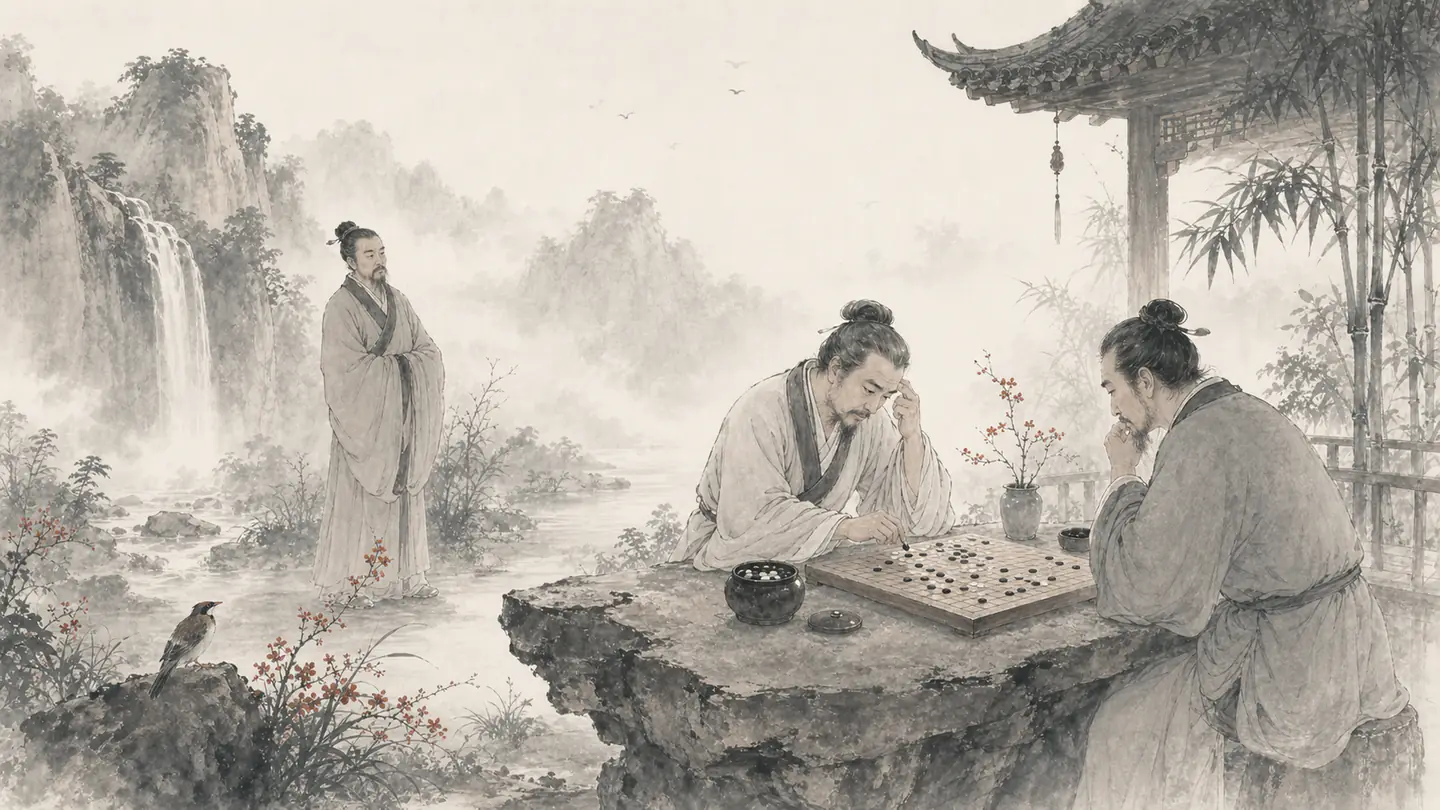
Chinese characters and pinyin
Simplified: 当局者迷,旁观者清
Traditional: 當局者迷,旁觀者清
Pinyin: dāng jú zhě mí, páng guān zhě qīng
Literal translation
The person inside the situation is confused; the observer sees clearly.
Natural English meaning
Emotional involvement can obscure what an outsider notices more easily.
Closest English equivalent
You can’t see the forest for the trees.
The Chinese proverb contrasts participant and observer; the English one contrasts details and the whole.
When to use it
Use it when an outside perspective helps resolve confusion.
When not to use it
An outsider may lack essential context, so distance does not guarantee correctness.
Example sentence
我们争了很久,还是请同事看看吧,当局者迷,旁观者清。
We have argued in circles; a colleague’s outside perspective may help.
Origin and cultural context
Earlier formulations contrast the confused participant with the discerning observer; the modern paired wording is attested in later literature and popular speech.
Classification: proverb. This label distinguishes a complete proverb or popular saying from a compact idiom or a quotation preserved from a classical text.
